
US Solar provides professional solar panel cleaning services engineered to restore peak energy output across commercial and utility-scale photovoltaic installations. Our purified-water cleaning process safely removes dust, dirt, mold, mildew, pollen, bird droppings, and baked-on grime from PV modules without risking surface damage or voiding manufacturer warranties.
Based in Texas and serving solar asset owners nationwide, we help solar farm operators, O&M companies, and independent power producers recover the revenue they lose to panel soiling every year. Whether your site runs fixed-tilt racking, single-axis trackers, or dual-axis tracking systems, our crews and equipment are purpose-built for every ground-mount configuration.
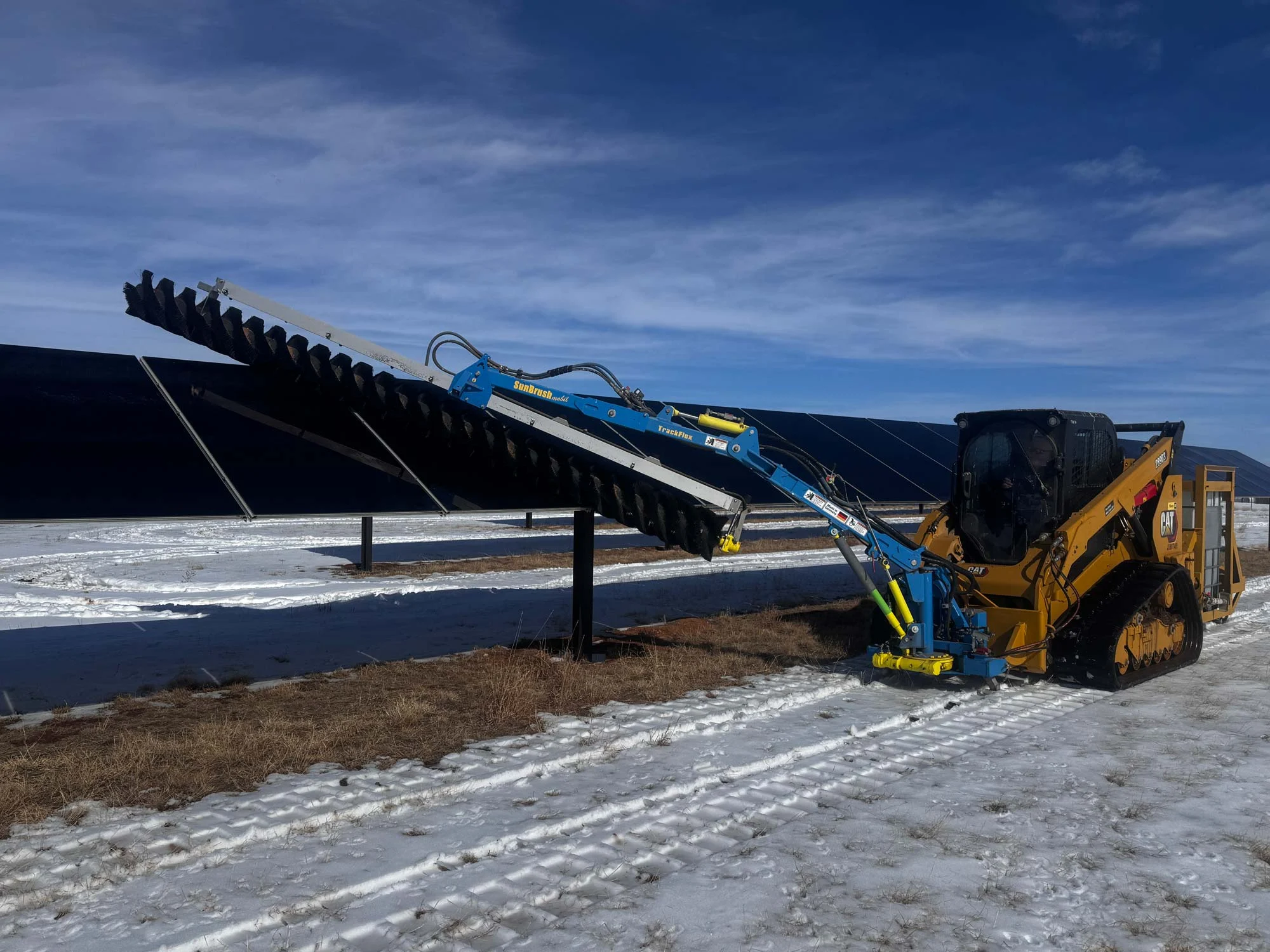
Why Solar Panel Cleaning Is Critical for Your Bottom Line
Soiling is one of the largest controllable losses in solar energy production. According to the National Renewable Energy Laboratory (NREL), soiling reduces annual energy output by up to 7% across the United States, with losses climbing as high as 25% in arid, high-dust environments. For a 150-megawatt solar farm, even a 1% drop in power output can translate to more than $200,000 in lost annual revenue.
In Texas, solar installations face a punishing combination of caliche dust, agricultural particulates, high winds, and extended dry periods between rain events. Without routine professional cleaning, these contaminants accumulate on your PV modules, blocking sunlight, raising cell operating temperatures, and accelerating long-term degradation. Industry data from Raptor Maps confirms that the average solar site experienced 5.77% underperformance in 2024, costing operators an average of $5,720 per megawatt in annualized revenue losses.
Regular solar panel cleaning is not optional maintenance. It is a direct investment in the energy yield, reliability, and service life of your solar asset.
Our Proprietary PV Module Cleaning Process
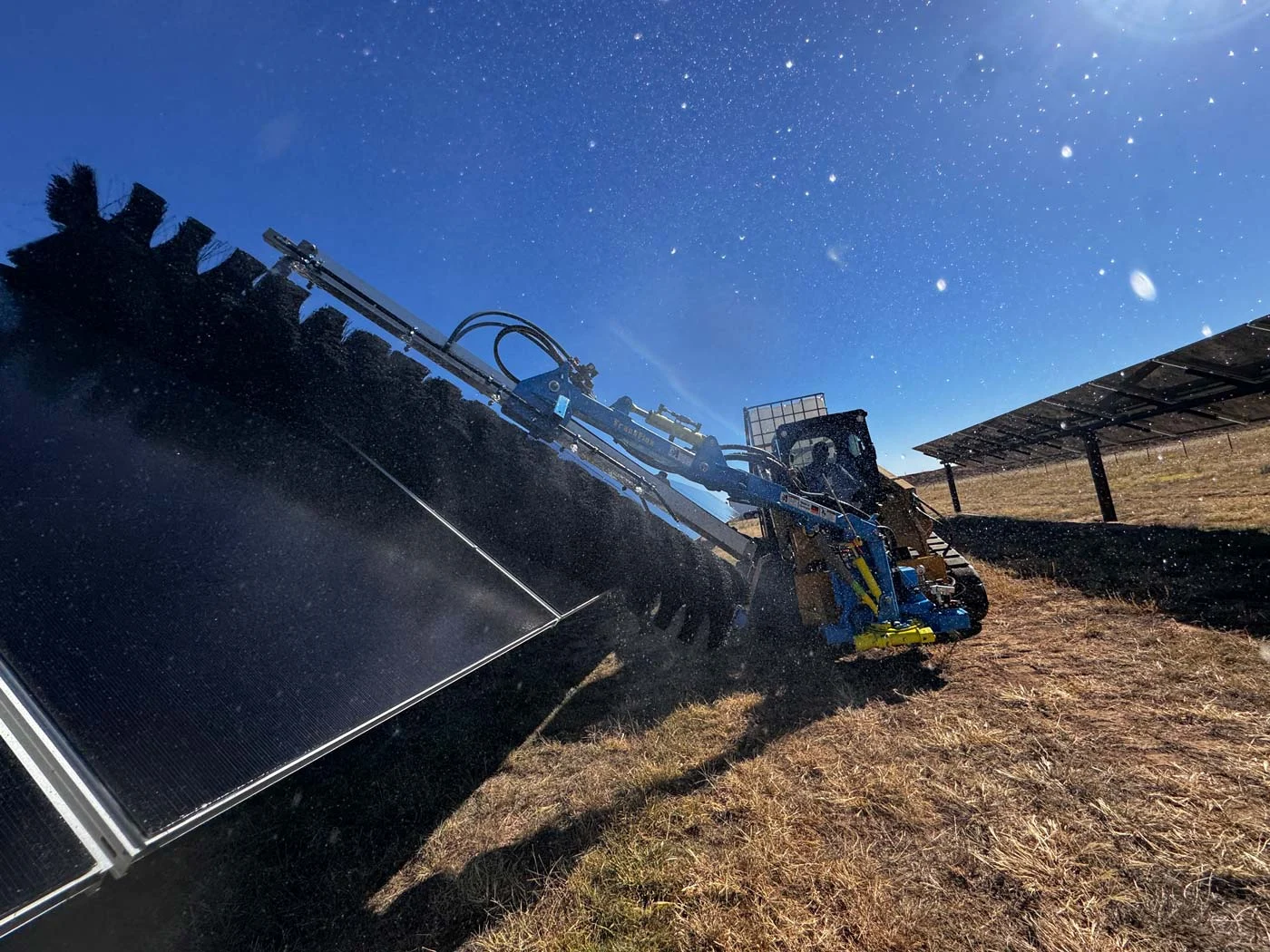
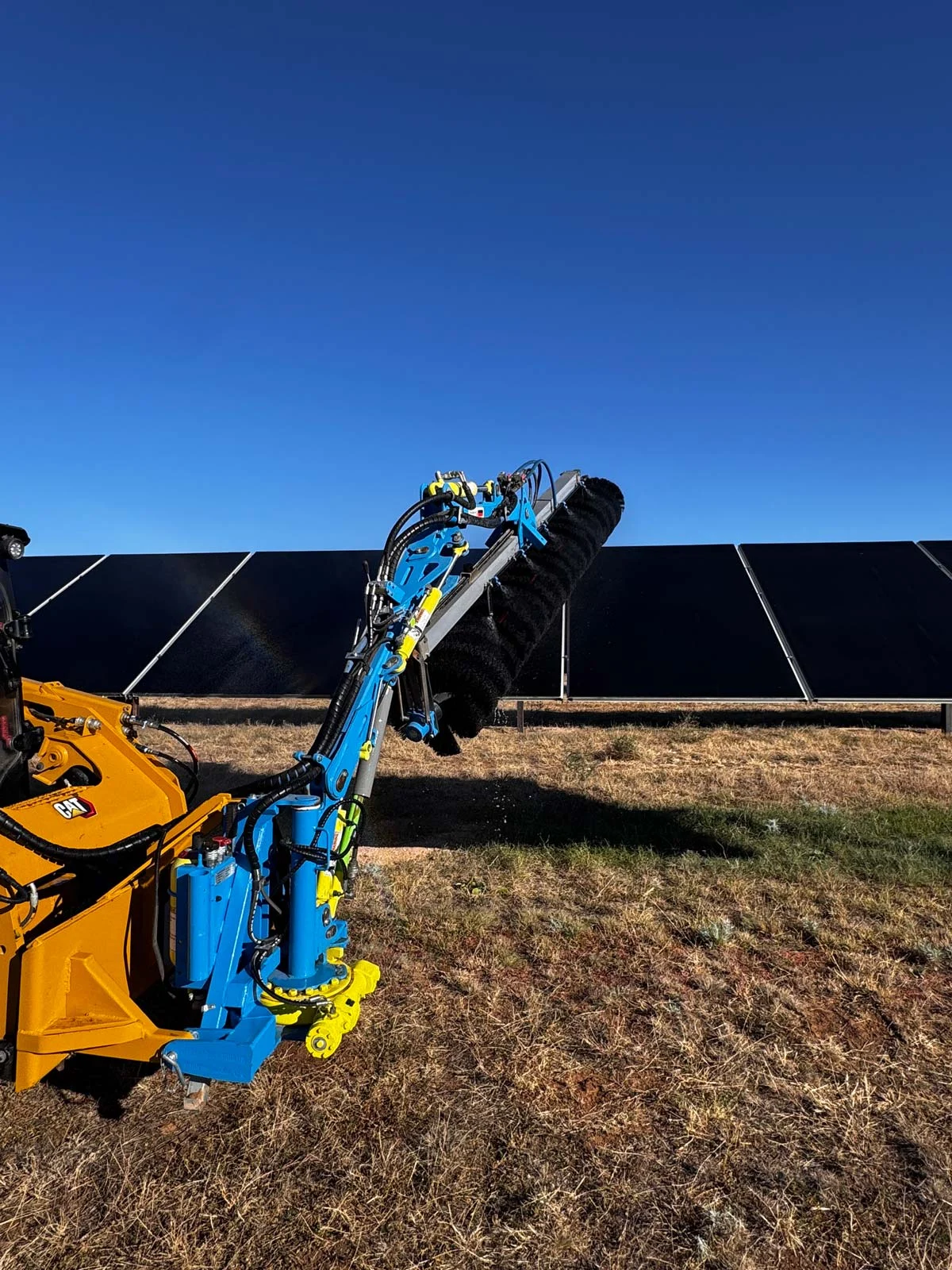
US Solar has developed a proprietary cleaning methodology specifically designed for utility-scale and commercial solar arrays. Unlike residential window washers or pressure washing crews who treat solar panels like any other surface, our process is built from the ground up to protect photovoltaic modules while delivering maximum cleaning efficacy.
Purified Water Solar Panel Washing
Our cleaning process uses purified water with total dissolved solids (TDS) levels engineered to prevent mineral spotting and hard water stains. Purified water acts as a natural solvent, lifting and dissolving surface contaminants without the need for harsh chemical detergents that can damage anti-reflective coatings, degrade frame seals, or leave residue that accelerates re-soiling.
Soft-Brush Mechanical Cleaning
We use specialized soft-bristle brush systems that make direct but gentle contact with the module surface. This removes stubborn, cemented soiling that water alone cannot dislodge – including mold, baked-on pollen, calcium deposits, lichen, and bird droppings – without scratching glass or damaging cell surfaces.

How Solar Panels Work and Why Cleanliness Matters
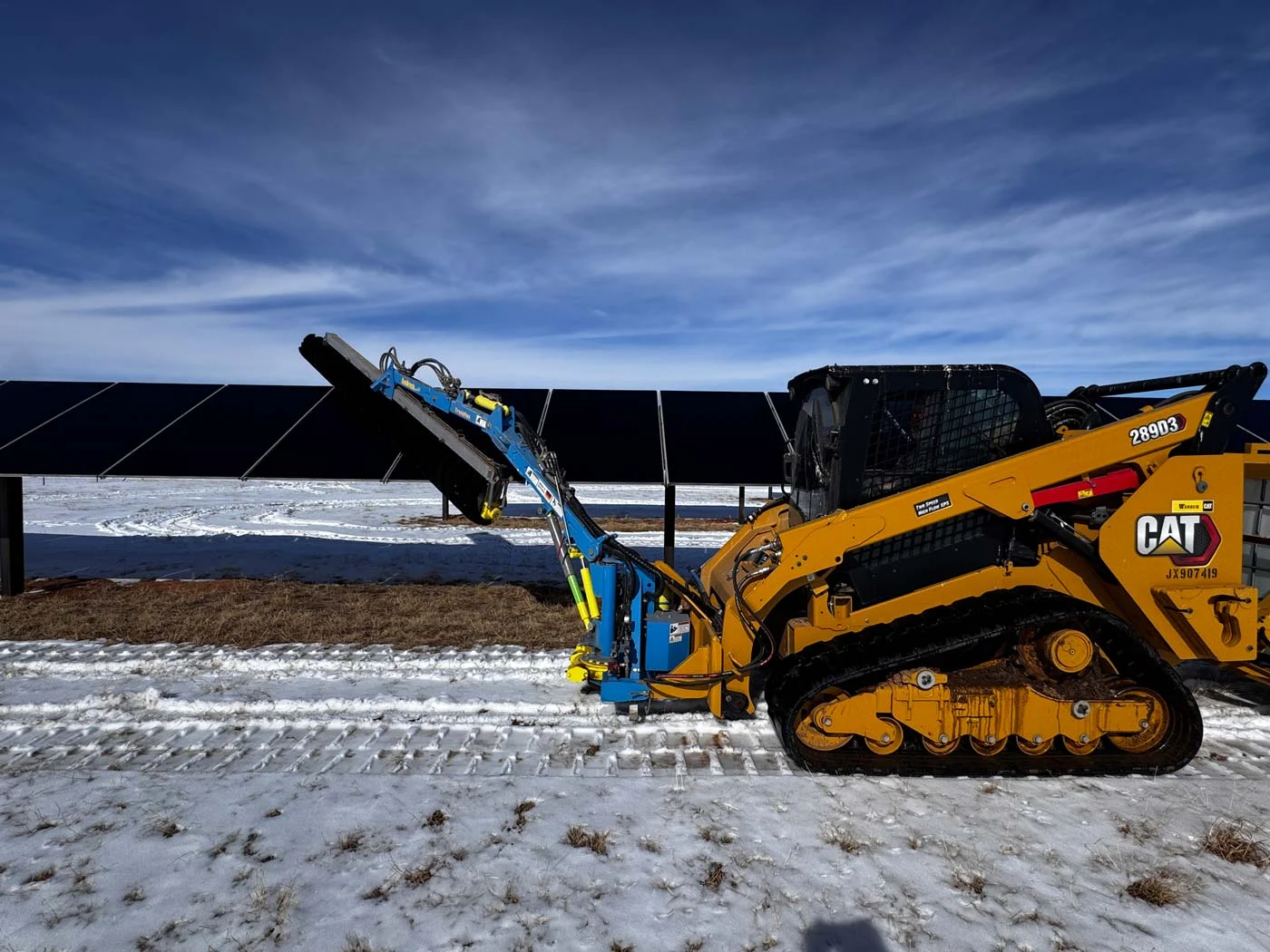
Solar panels generate electricity by exposing photovoltaic cells to sunlight. When photons strike the semiconductor material inside a PV cell, they knock electrons free, generating direct current (DC) electricity. An inverter then converts this DC power into alternating current (AC) electricity that feeds into the grid or powers on-site loads.
This process depends entirely on light reaching the cell surface. Any material sitting on top of the glass – whether it is a thin film of dust, a splash of mud, or a crust of bird droppings – reduces the photons available for conversion. The result is a measurable, immediate drop in energy output and a lower soiling ratio for the affected modules.
Over time, soiling also raises cell temperatures by trapping heat against the module surface. For every 1°C above standard test conditions (25°C), a typical crystalline silicon PV cell loses approximately 0.4% to 0.5% of its output. In the Texas summer, where ambient temperatures routinely exceed 40°C, soiling-driven thermal losses compound the direct shading losses, magnifying the financial impact on your project’s internal rate of return.
Professional PV module cleaning restores the optical clarity of the glass surface, returning your array to its designed irradiance-to-output ratio and reversing the thermal penalty caused by soiling buildup.
Frequently Asked Questions About Solar Farm Cleaning
Cleaning frequency depends on your location, local soiling conditions, and the financial threshold at which lost production exceeds the cost of cleaning. Most solar farms in Texas benefit from semi-annual or annual cleaning. Sites near unpaved roads, agricultural operations, or heavy bird activity may require more frequent service. We can help you establish the optimal cleaning interval based on a site assessment, soiling ratio data, and production data review.
NREL estimates average annual soiling losses of 2% to 7% in the United States, with losses exceeding 25% in high-dust environments. The IEA Photovoltaic Power Systems Programme estimates global soiling-induced annual energy losses at 3% to 5%, representing billions in lost revenue industrywide. In dollar terms, even small soiling percentages on a utility-scale installation represent six- and seven-figure revenue losses over the life of the asset.
No. Pressure washing can crack tempered glass, damage anti-reflective coatings, force water past frame seals, and void manufacturer warranties. Professional solar panel cleaning requires low-pressure purified water and soft-contact brush systems specifically designed for photovoltaic surfaces.
PV module cleaning is the industry term for professional cleaning of photovoltaic solar modules. It refers to the specialized process of removing soiling, dust, biological deposits, and other contaminants from the glass surface of solar panels using equipment and techniques designed to protect the module while restoring maximum light transmission and energy output. The goal is to return each module’s soiling ratio as close to 1.0 as possible, meaning zero light-transmission loss from surface contamination.
Rain removes some loose surface dust, but it is not a substitute for professional cleaning. Light rain can actually make soiling worse by creating a mud film that dries and hardens on the panel surface. Research shows that cemented soiling – caused when dust bonds with morning dew or light rainfall – often requires mechanical cleaning to remove. This is why even solar farms in moderate climates still require scheduled professional washing to maintain optimal energy yield.
Yes. We regularly clean solar farms equipped with single-axis trackers, dual-axis trackers, and fixed-tilt racking systems. Our crews understand the unique geometry and mechanical considerations of tracker-mounted arrays, including NEXTracker, Array Technologies, and other leading tracker platforms, and we adjust our cleaning approach to protect your tracking hardware while delivering thorough, consistent results across every module.
Yes. While our primary operations are based in Texas, we service solar farms and commercial solar arrays nationwide. Contact us with your site location and array size for a custom quote.
Mold, mildew, and biological films such as lichen can act as a living anchor that traps dirt, dust, and pollen directly on the glass. When left untreated, biological buildup can block light from reaching photovoltaic cells, create uneven shading across modules, accelerate re-soiling, and may contribute to long-term coating degradation. Professional cleaning removes this buildup before it compounds into a larger performance or maintenance issue.
